
Business size
Ecommerce Profit Pulse
Revenue tells you
how big the business is.It doesn’t tell you
how good it is.
Start by checking the business underneath the sales.
Answer 10 questions and get a personalised Platform report showing what is holding together, where pressure is building, and what to check next.
See my Platform report →
10 questions · about 2 minutes · opens immediately
HY AccountingPlatform report
Your Platform result
Scale-Supporting
33/ 50
Scale-Supporting
Platform
Your score, stage and the parts of the business worth looking at next.
Commerce engineWorking
Connected intelligenceUnder pressure
Financial controlDeveloping
Owner independenceWorth checking
One practical next checkWhere the business still depends on you.
Where Platform leads next
Platform shows how it’s built.
Then the numbers show what it gives you.
Your Platform report opens immediately. When the numbers still need answering, Ecommerce Profit Pulse uses the actual business economics to test what works now — and what needs to change.
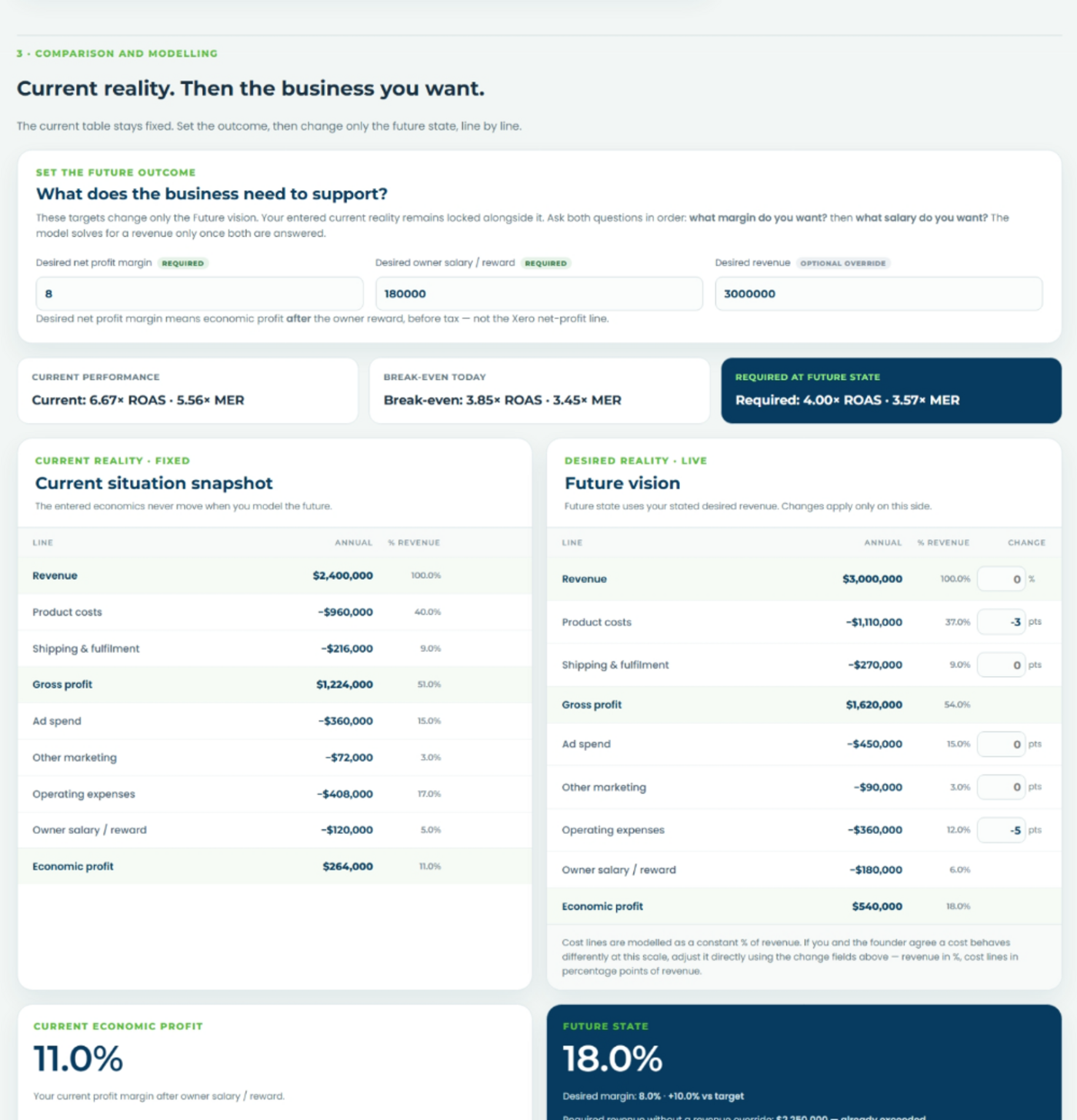
- Current economics
- Future target
- Owner reward
Already ready to work through the numbers?
Book an Ecommerce Profit Pulse
The founder reality
A bigger business doesn’t always give you a better life.
You can make more money and still have less time. You can grow the team and still have every important decision come back to you. You can build a bigger business and still wonder why it doesn’t feel as rewarding as it should.
Money
Maybe you’re earning more. Maybe not enough for what you’re carrying.
Time
More of the business still needs you.
Freedom
You’ve built more — but can you actually step away from it?
Growth should give you more choices. Not just a bigger job.
The owner journey
As the business grows, the question changes.
The problems don’t disappear. They evolve.
01
RevenueAre people buying?
At the beginning, that’s the whole game.
02
ProfitAm I keeping enough?
Sales are coming in. Now you care about what is actually left.
03
CashWhy does growth keep eating it?
Stock, marketing, wages and tax keep pulling cash forward.
04
FreedomCan this run without me?
Can you step away without everything slowing down?
?
The bigger questionWhat have I actually built?
A business that works for you — or a bigger machine that still needs you at the centre?
What a stronger business gives you
A stronger business should give you more choices.
Grow it because you want to. Step back without everything slowing down. Bring in management. Take more out. Keep it, sell it or invest somewhere else.
Would you be happy owning this business if you weren’t the person holding it together?
If the answer is yes, you’ve built something with real strength. If the answer is no, the question is why.
The Ecommerce Profit Pulse
Three questions. One business.
You don’t need another dashboard. You need to know whether the business is built well, makes money and gives you enough back.
01
You start here
Platform
Is it built properly?
Start with 10 questions about how the moving parts work together.
02
Next · completed live
Performance
Does it make money?
We test the economics using your actual numbers.
03
Then · completed live
Payday
Do you get enough out of it?
We test whether the outcome is enough for you.
Start with Platform →
Answer 10 questions and see where the business is strong — and where it may still be relying on workarounds or you.
Start with Platform
How well are the parts actually working together?
Your Platform is more than your website. It’s the systems, stock, data, fulfilment and decisions that keep the business moving.
Your
business
business
Ten questions. One clearer view of how the business is actually holding together.
Built by HY Accounting
Built from more than 20 years inside real businesses.
HY Accounting combines accounting depth, CFO thinking and commercial strategy to help business owners understand what is really happening and make better decisions.
“They have this unique ability to make complex topics clear and manageable, allowing me to feel confident and at ease with my business finances.”City Bath Society
Your first step
See how well the business is actually built.
Start with 10 questions and get your personalised Platform result.
Start my Ecommerce Profit Pulse →10 questions · Platform first · No financial figures needed yet
See your personalised Platform result immediately after completing the questions.